Ever open a new file and feel slowed down before you even begin?
You see mixed documents, missing pages, and formats that take time to sort. The intake step drags on, your queue grows, and small fixes start eating into time meant for real decisions.
Most MCA funders, brokers, and insurance teams deal with this every day. When documents come in clean and complete, reviews move faster. When they don’t, everything after intake takes more effort.
That’s why document verification sits at the front of every file. It helps teams keep reviews steady, avoid back-and-forth, and catch issues early.
Automated document verification gives you a simple way to clean up files at the start, so your team can focus on underwriting and decisions instead of fixing paperwork.
In the sections below, we’ll explain what automated document verification means for funding teams reviewing business applications, where it fits into daily workflows, and how clean documents help reviews move faster.
TL;DR
- Automated document verification checks if documents are real, complete, and accurate before underwriting starts.
- It flags missing pages, mismatched details, and fraud risks early, so files move with less rework.
- Teams use it on IDs, bank statements, tax forms, renewals, and claims to keep reviews steady.
- Tools like Heron scrub documents from your inbox, run checks in seconds, and feed clean data into your CRM so your team can focus on decisions, not paperwork.
What Is Automated Document Verification?
Automated document verification is a way for funding teams to verify documents by checking whether key details line up across each file.
Instead of reviewing every page by hand, the system scans each submitted document using optical character recognition (OCR) to read the text and looks for issues that need attention.
It focuses on flagging problems early, such as missing pages, mismatched names, altered numbers, or details that don’t match the business or owner on the file.
Many teams use automated document verification software to support document validation, so key details get verified automatically without relying only on manual review.
These tools compare data across documents, confirm document authenticity, and surface issues tied to fraud prevention or inconsistent information.
Document verification also sits inside the KYB process. Funding teams use these checks to confirm the business, its owners, and its documents before the file moves forward.
Types of Documents Funding Teams Verify
Funding teams working with business loan and funding applications handle many files each day, and each document type needs a quick check. These are the documents most often verified across MCA, SMB lending, equipment finance, and insurance workflows:
- IDs
- Bank statements
- Utility bills
- Voids and checks
- Corporate documents
- Tax forms
- Financial statements
Why Document Verification Matters for Funding Teams
Document verification shapes daily work across MCA, SMB lending, equipment finance, insurance, and other financial institutions that review business applications.
Here’s how it impacts your day-to-day work:
Protects Against Bad Files
Bad information creates extra work for every team involved. Mismatched names, wrong dates, missing pages, or fraudulent documents create rework across intake and underwriting and slow the entire file down.
It also flags edited or inconsistent document formats, which reduces kickbacks, repeat checks, and manual cleanup later in the process.
Supports Compliance Needs
Teams use verification to stay aligned with KYB, KYC, anti-money laundering, and other regulatory compliance requirements tied to daily operations.
With tools that support online document verification, teams get a repeatable compliance step built into their workflow, instead of treating it as just a compliance checkbox reviewed after the fact.
Keeps Sensitive Data Safe
Funders and brokers work with identity data, bank activity, and documents that should not enter the workflow unless they are real and accurate.
Verification confirms document authenticity and limits exposure to identity theft, altered records, or unclear sources, which helps teams protect sensitive information without adding manual checks.
Gives Underwriters Better Inputs
Underwriters rely on accurate details during cash flow reviews. Verification reduces rechecks and follow-up questions by giving underwriters consistent fields and extracted data they can trust.
This keeps underwriting focused on risk and structure, not resolving document issues that should have been caught earlier, making document verification important for teams that want clean inputs from the start.
Where Funding Teams Use Document Verification
Across intake, review, renewals, and claims, these are the points where document capture and document checks determine how smoothly work progresses.
New Submissions
Teams begin with core business and owner details. They run ID verification and KYB steps to confirm ownership and address, then compare the visual inspection zone and listed details to the information already on file.
Catching mismatches here keeps the onboarding process from stalling later. Many teams use automated identity document verification at this stage to confirm the user’s identity and essentially verify that the right person and business sit behind the file.
Bank Statement Reviews
During cash flow review, teams look for missing pages, image edits, altered numbers, high-value transactions, or statements that don’t match the business.
Issues show up early, before bank statement processing begins. This is where data extraction and patterns tied to fraud detection surface, reducing the chance that altered files or a fraudulent document move deeper into review.
Loan Applications
Applications combine documents tied to business revenue, ownership, and bank activity. Teams review details like expiration date, routing information, and fields that affect the identity verification process.
Clear checks at this stage limit human error and reduce rework during loan processing, especially when teams would otherwise rely on manual verification across mixed document formats.
Renewals
Renewals depend on updated documents lining up with past records. Teams compare new submissions against earlier data printed in the file to confirm consistency.
When something does not match, the file pauses for further investigation instead of moving forward with outdated or unclear details, keeping verification results clean across repeat submissions.
Insurance and Claims
Insurance teams review documents to understand what happened and whether the claim details hold together.
Looking at documents individually and in context helps teams spot gaps, missing information, or fraud attempts before the claim reaches insurance underwriting or payout review, which protects both internal teams and the customer experience.
Manual vs Automated Document Verification
Funding teams use two very different approaches to document checks. The outcomes shape how fast a file moves and how much clarity your team has during the review.
Manual Review
Manual checks rely on people inspecting documents by hand. This often includes reviewing names, dates, images, and various security features to confirm everything lines up.
Manual review can slow teams down because:
- Work depends on human review, which varies from person to person
- Details get missed during busy days or large intake spikes
- Reviews stretch longer as queues grow
- Files require repeat checks when documents arrive in mixed formats
Manual steps still matter, but they add strain when volume rises or teams juggle many files at once.
Automated Review
Automated checks provide teams with quicker clarity by reading files through automated document verification systems that rely on machine learning algorithms, rather than relying solely on manual inspection.
With digital document verification tools, teams see:
- Faster outcomes during heavy intake days
- Cleaner fields that reduce failed verification issues
- Better operational efficiency across underwriting and funding
- More consistent verification results across every file
Automation does not replace people. It removes repetitive document checks so underwriters can spend more time on judgment and final calls, not paperwork.
Signs Your Team Needs Automated Document Verification
Certain patterns in your daily workflow can reveal when your current process no longer keeps up with the volume or complexity of the files coming in. These signs often show up gradually and become harder to ignore over time.
- Your team spends too much time checking driver's licenses and basic ID details
- You catch errors late in the loan process when they’re harder to fix
- Files show mismatched information or details that don’t line up
- Underwriters wait for corrected documents and lose time to back-and-forth steps
- Your queue grows faster than your team can review
- Manual tracking or human verification makes reviews inconsistent
- Your team needs help spotting early signals that point to fraud risk
- You rely on outside document verification services because internal tools don't keep up
- You want a simple way to use digital document verification to detect fraud
Why Teams Choose Heron for Automated Document Verification
Many teams reach a point where messy files, long intake steps, and slow reviews start holding everything back. Heron steps in to clear that weight.
It gives MCA funders, brokers, equipment finance teams, and MGAs a clean, accurate starting point on every file without adding staff or rebuilding systems.
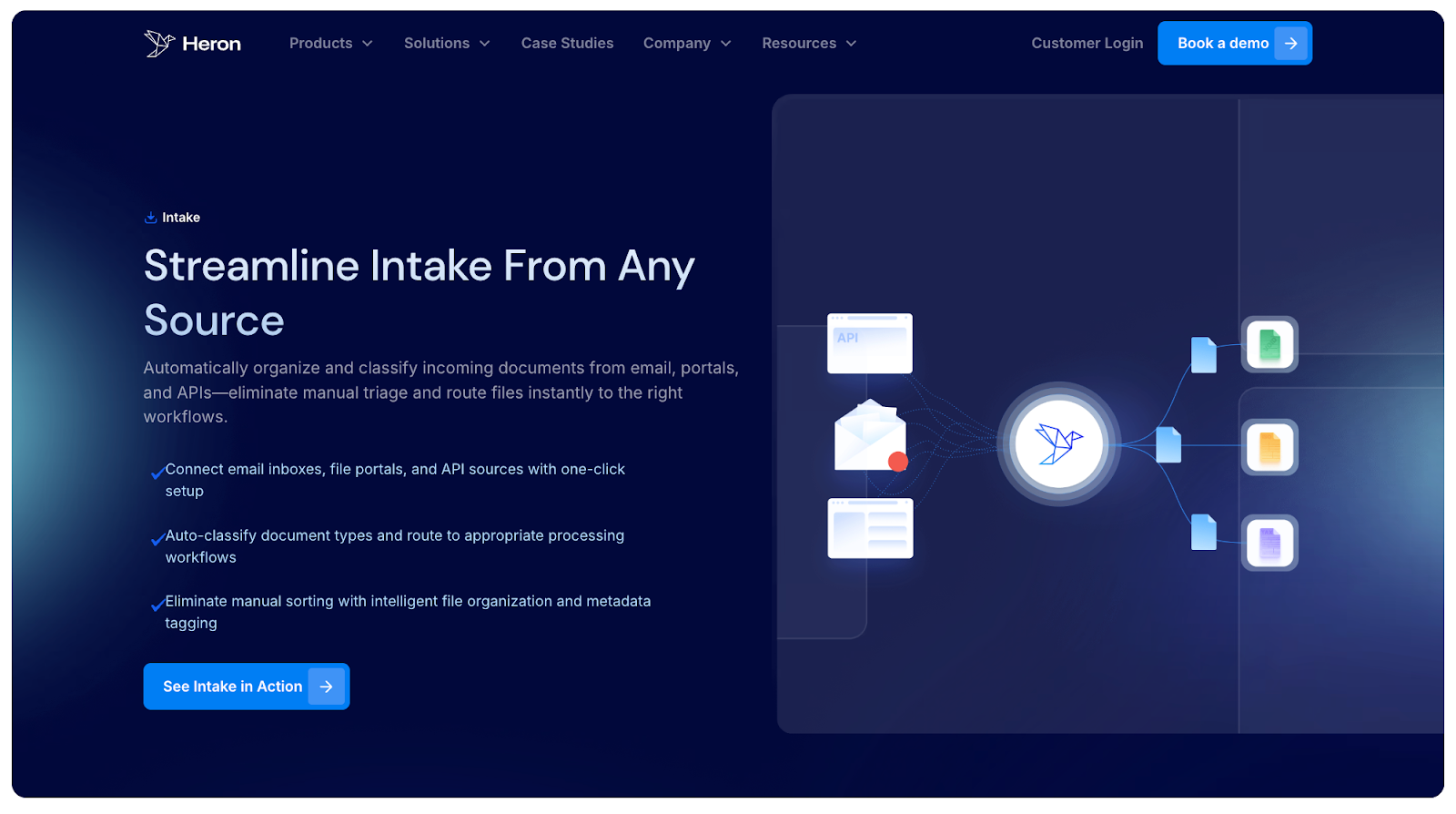
Heron connects directly to your submissions inbox, scrubs documents the moment they arrive, and pushes clean fields into your CRM.
Everything you need for fast verification, like ID checks, KYB signals, document scrubbing, fraud flags, and missing page detection, happens in seconds.
That shift turns manual document verification work into a steady, predictable workflow your team can trust.
Key Features That Make Heron Stand Out
- Reads the documents funders and brokers rely on - Bank statements, IDs, voided checks, financials, tax returns, ISO apps, corporate records, and more. All handled with high accuracy across 50+ formats.
- Instant document scrubbing and validation - Heron checks for mismatched names, missing pages, altered fields, and fraud signals tied to bank activity, patterns, or document edits.
- Automated ID and business checks - Use built-in SOS checks, KYB checks, and ID validation to confirm business details and identity information early.
- Smart classification for every file - Heron sorts files into the correct document type automatically, even when they come from mixed ISOs or shared inboxes.
- Fraud and risk detection built for fast decisions - Detect manipulated bank statements, duplicate files, and risk patterns without slowing down the queue.
- Kickouts for incomplete submissions - Heron flags missing documents or key information so your team doesn’t chase paperwork later.
- Real-time sync to your financial CRM - Clean data flows into Salesforce, Zoho, LendSaaS, Novidea, Origami, Leasepath, and more. Saving hours of retyping and manual uploads.
FAQs About Automated Document Verification
How to automate the document verification process?
You can automate the document verification process by using tools that scan each file, compare key fields, and structure information into consistent data structures. These systems handle checks for names, dates, signatures, and formatting issues, giving teams a faster way to review documents without relying on manual inspection.
What is the automated verification process?
The automated verification process reads the document, pulls out the important details, and checks for mismatches or signs of tampering. It can review items like expiration dates, address details, and information in the machine-readable zone to confirm accuracy.
What is an automated verification system?
An automated verification system is software that reviews documents and confirms whether the information is valid. It supports digital identity verification, flags incomplete files, and checks for changes that might signal risk. Many systems also help verify supporting items, such as employment contracts, when they are part of a case.
Why do funding teams rely on automated document verification?
Funding teams rely on automated verification to save time, reduce mistakes, and protect against fraud. Clean files help underwriters move faster, improve customer satisfaction, and reduce the back-and-forth caused by missing or inaccurate information.