
Handling funding deals at scale is hard, especially when your team still works through messy inboxes and slow reviews. Think about a high-volume MCA funder that gets more than 30 ISO submissions each day.
Underwriters spend 15 minutes on each file just to get through the basics, which leaves less time to push strong deals forward. Before they know it, faster competitors pick up the same files and close them first.
The right lending software can solve these problems. In this article, we'll introduce you to 8 solutions that can help you and your underwriting team handle more deals with less stress and far better control.
What Is Lending Software?
Lending software is a digital system that helps you manage the full lending process in one place. The software brings every step of the loan lifecycle into a single platform.
You can take in applications, run credit checks, review deals, approve files, store documents, and track payments from start to finish.
Many financial institutions use this type of software because it gives them a clear view of each file.
Banks and credit unions use it to handle both commercial loans and consumer loans in a single, organized system. It gives their teams a clear path from intake to approval without extra back and forth.
For SMB lending, funders depend on this setup because it helps them stay on top of submissions and manage higher volumes with less manual work.
The main value of these software solutions is the way they reduce manual tasks. You do not have to jump between tools or chase missing items. The system keeps information in order and helps your underwriting team move deals forward with more confidence.
Types of Lending Software
There are different kinds of modern lending software that specialize in different aspects of the loan process. Let's look at the main types:
Loan Origination System
A loan origination system (LOS) supports the early stages of the lending process. It takes in applications, checks documents, and collects the data you need for credit review.
The system places each file in a clear path so your underwriters can move step by step without jumping between tools. It is helpful when your team handles various loan types because all information stays in one place.
You can see what is complete, what is missing, and what needs attention. This makes it easier to spot risks early and keep your decisions consistent.
Loan Management System
A loan management system helps you manage accounts after approval. It keeps schedules, interest, and payment activity organized so you always know where each account stands.
It can update balances, record payments, and support adjustments when a business needs changes. This helps your team handle ongoing work with less manual effort.
Over time, it gives you a clear view of how each account is performing so you can protect your cash flow and support your clients in a simple way.
Document Automation
Document automation tools remove a lot of the slow, repetitive work that usually takes up your team’s time.
Using technologies such as intelligent document processing and optical character recognition, this type of software can read documents, collect data, and move files to the right person at the right time.
It can also run credit and fraud checks through connected databases, checks for missing fields, flags inconsistent data, and matches documents to the correct deal without manual sorting.
This gives your team more time for underwriting rather than data entry and other admin tasks. It also helps you keep your process clean, steady, and easier to manage each day.
Reporting and Analytics
Many lending tools include data analytics that help you understand how a portfolio performs. You can look at approval trends, repayment patterns, risk signals, and other key details.
Real-time reports help you spot issues before they grow. These insights guide your long-term decisions and support a healthier portfolio.
Clear reporting also helps you keep your team aligned with accurate information rather than guesswork.
8 Lending Software to Check Out for Better Loan Workflows
Here are 8 lending software tools that can help you work faster and keep your process more organized. Each one supports a different part of your workflow, so you can pick the setup that fits the way your underwriting team handles deals.
1. Heron for Document Intake and Validation
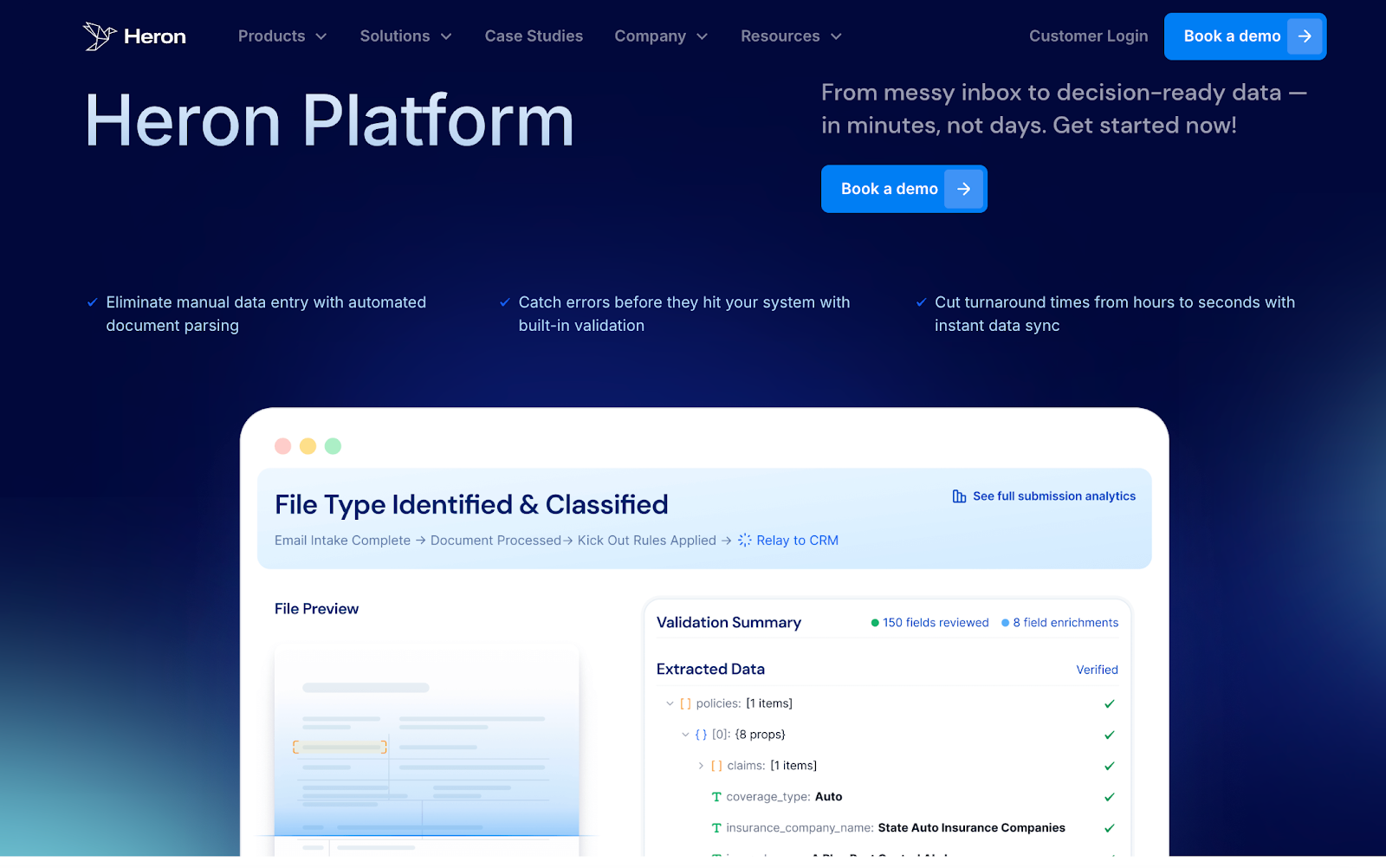
Heron is a document automation platform built to support high-volume MCA funders and brokers scale without growing headcount. It keeps your team out of paperwork so you can focus on funding deals.
Many teams cut processing costs by more than 75% once they switch to Heron. They respond in hours instead of days and often support 2x the loan volume with the same staff.
Heron handles data entry, document intake, bank statement review, and funder decision emails. Clean and structured data moves into your CRM in seconds.
Underwriters get files with strong details, fewer gaps, and with a 99.5% accuracy rate when parsing financial documents; they spend far less time fixing errors or searching for missing items.
Key Features
- Automated document intake - Turns incoming packages into clean data and sorts files so your team skips manual prep work
- Submission checks - Reviews each loan application to confirm needed documents and adds flags for missing or incomplete items
- KYB checks - Cuts through slow reviews with fast SOS checks, instant court record searches, and quick web presence scans that remove up to 250+ hours of monthly bottlenecks
- Data enrichment - Pulls outside data so underwriters receive stronger context and clear details before they begin review
- Accurate business bank statement parsing - Converts statements and business forms into structured data with high accuracy and no manual entry
- Handwritten and scan support - Reads handwritten forms and scanned PDFs, so your team does not fix unreadable pages
- Data quality review - Spots issues and uses human review only when needed to keep records clean
- Direct system integration - Connects to CRMs, PAS, rating engines, and workbenches to create or update records inside your workflow
- Audit trail tracking - Logs each action to help maintain clean records for regulatory compliance
2. LoanPro for Automated Loan Servicing and Management
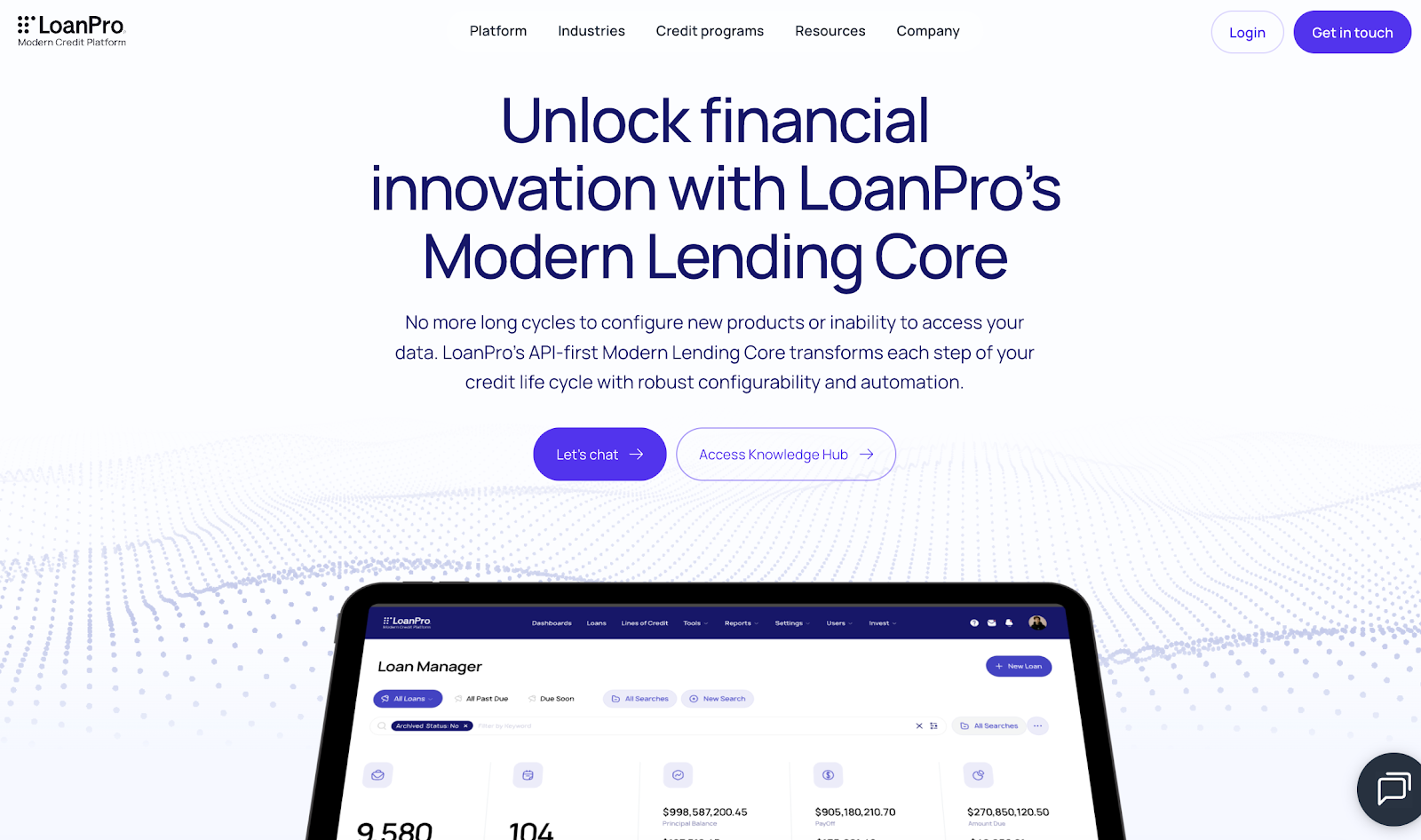
LoanPro’s Modern Lending Core supports teams that work in digital lending, consumer lending, and personal loans.
The system gives users more control over lending operations by giving them simple access to data and tools that help manage the full credit life cycle.
The platform uses an API based setup that helps underwriting teams build and adjust lending products without long setup cycles. It helps reduce manual steps in daily work, which can support loan growth and smoother lending operations.
Key Features
- API-based setup - Gives teams a simple way to connect systems, build lending products, and adjust settings as needed
- Automation engine - Handles many service tasks in the background so teams can focus on review and account decisions
- Real-time data access - Lets users pull updated account data at any time through Data on Demand and other tools
- Account tracking - Records each account event so teams can see clear activity across the full credit life cycle
- Custom fields - Allows teams to add their own fields to help support lending operations across many product types
3. MeridianLink for End-to-End Loan Origination

MeridianLink is a loan origination software that helps financial institutions work through the full lending cycle in one place. The lending platform supports users who want a single system for consumer lending, mortgage work, and account opening.
The system brings these parts together so underwriters can move loan files, view data, and manage steps without switching tools. It also helps reduce manual tasks by letting users apply rules, pull reports, and connect with outside services like credit bureaus and eSign tools.
MeridianLink works across many loan types, including personal loans, credit cards, home equity, and business loans.
Key Features
- Single sign-on - Lets users move between consumer and mortgage systems with one login to keep work simple
- Smart cross-sell - Uses borrower data to suggest other loan products inside the same lending platform
- Flexible account opening - Allows teams to open deposit accounts from either system to support a smooth start for new users
- Automated decisioning - Applies rules to loan files to keep decisions steady and reduce the need for manual checks
- Real-time reporting - Shows live performance data so teams can spot delays and understand loan activity
4. TurnKey Lender for Loan Management
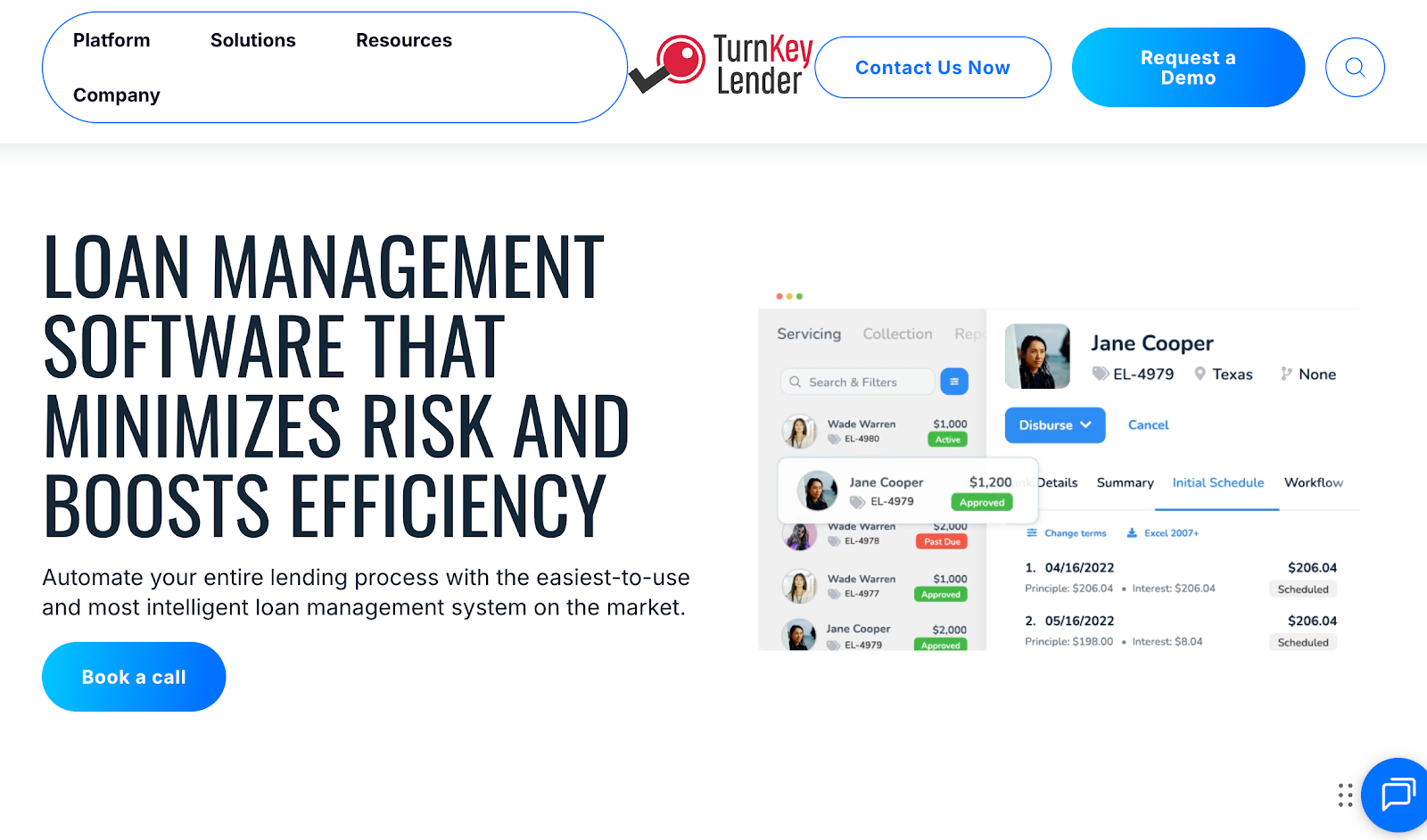
TurnKey Lender is a loan management software built to help teams handle the full lending cycle in one place. It supports loan origination, credit scoring, underwriting, servicing, and collections within a single system.
The software works for consumer lending and commercial programs. It allows users to review applications, process credit checks, manage loan files, handle payments, and view account history in one environment.
Reporting tools also give users insight into portfolios and borrower activity, which can support internal review and planning.
Key Features
- Loan origination module - Supports application setup and loan terms while giving teams a clear view of each step in the intake process
- Credit scoring and underwriting - Uses scoring models to help teams review applications and reduce mistakes during decision steps
- AI-powered decisioning - Applies machine learning models to support fast decisions within the loan management software
- Lifecycle loan management - Handles servicing, payment tracking, account updates, and other actions in one system
- Reporting and analytics - Provides insight into borrower activity and account behavior through built-in reporting tools
5. FIS for Credit Risk Management
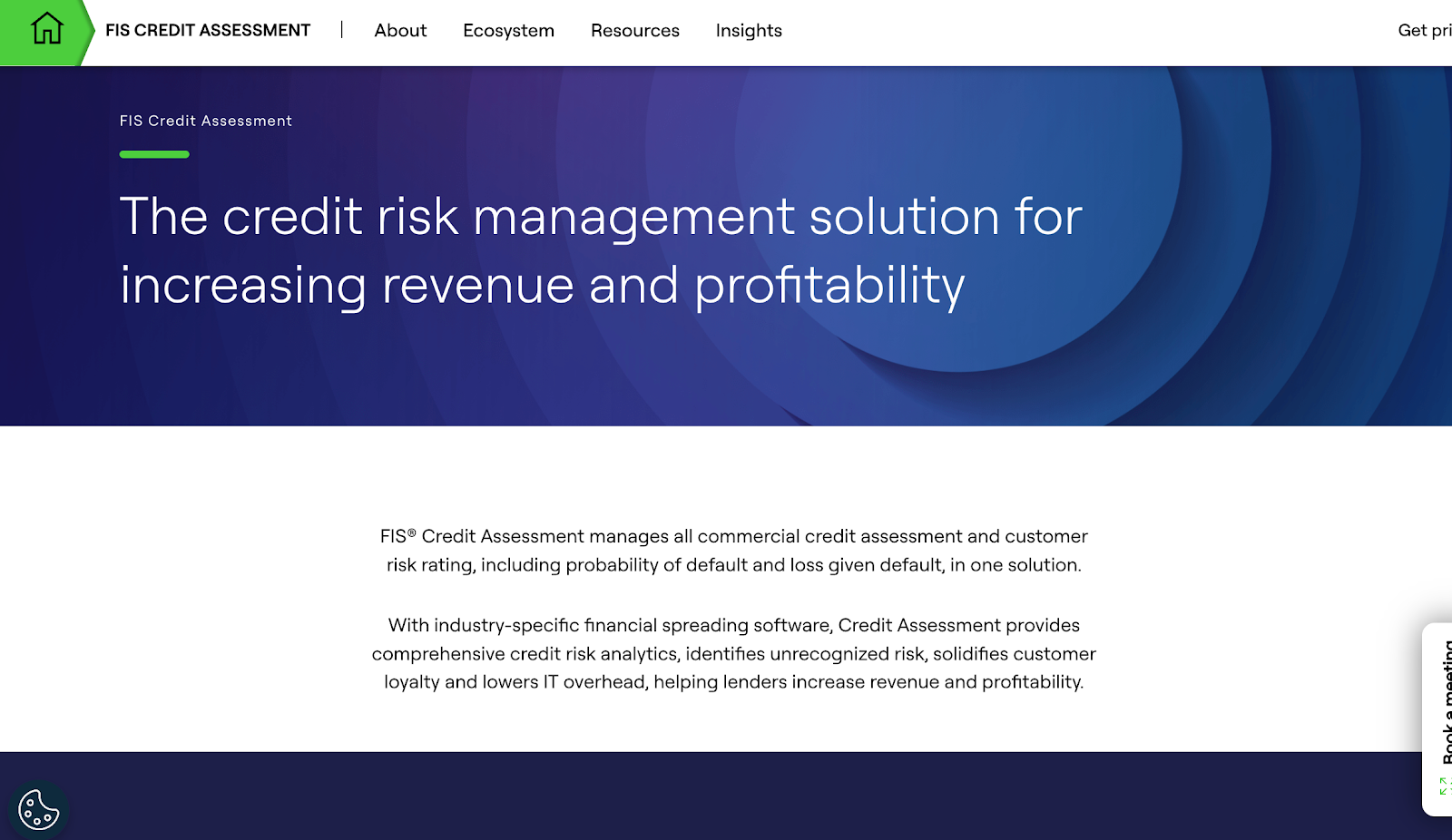
FIS is a credit risk management solution used to handle commercial credit assessment and customer risk rating in one system.
It supports teams that manage the probability of default, loss given default, and overall portfolio risk. The software also provides financial spreading tools that help teams review statements consistently.
The platform brings risk data, credit files, and workflow steps into a single environment. This helps lending teams review accounts, see early warning signs, and understand risk levels across the portfolio.
Key Features
- Centralized risk rating - Supports the review of credit files, risk grades, and default measures within one system
- Financial spreading tools - Helps teams analyze financial statements with structured spreading that follows set rules
- Portfolio visibility - Provides a single view of accounts so users can spot early risk signals and monitor changes
- Integrated workflow - Connects credit steps across the commercial lending cycle to keep activity in one place
- Relationship support - Gives teams insight into customer needs so they can review accounts and spot new opportunities
6. Zoho for Lending CRM
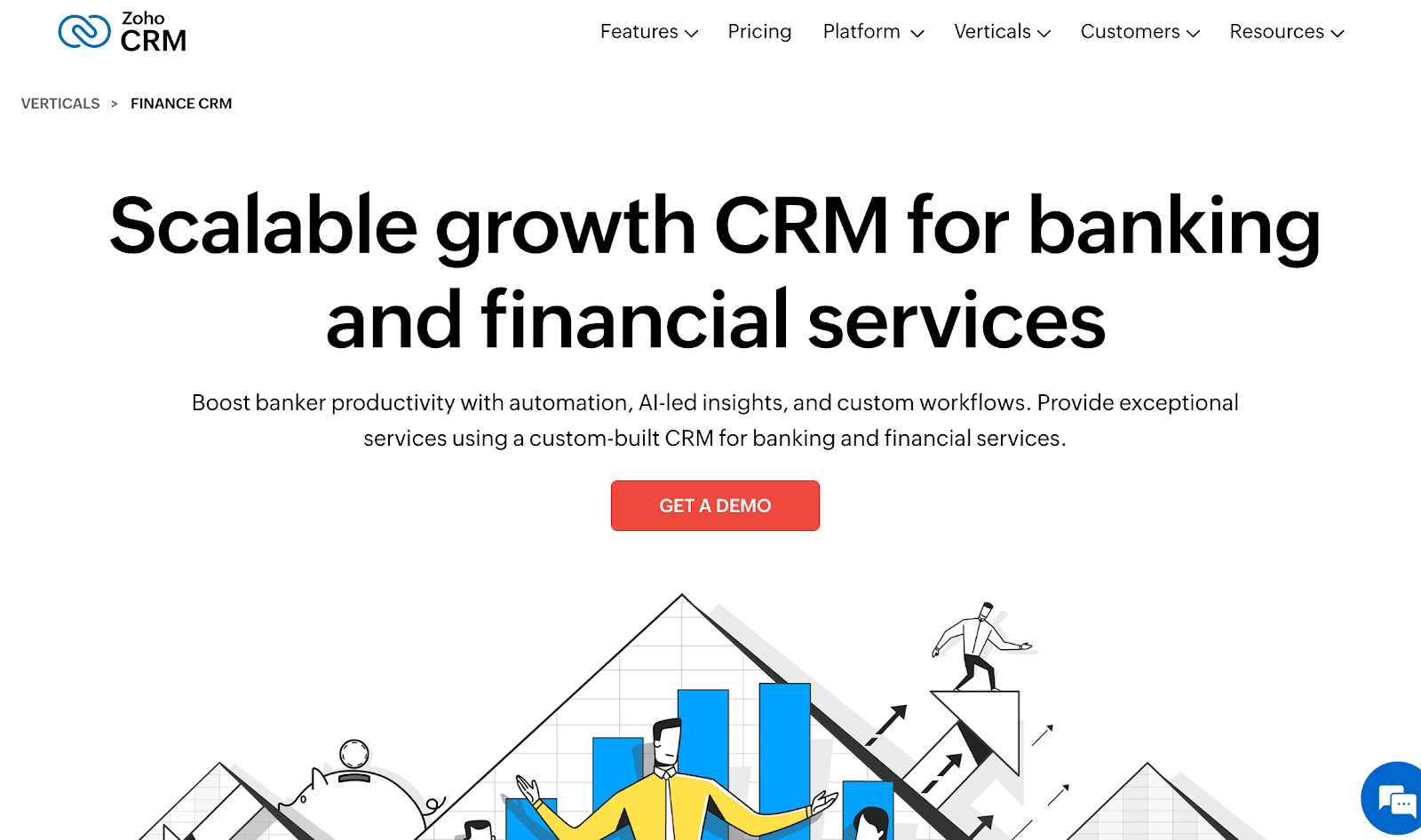
Zoho is a CRM platform that can be custom-built for business finance platforms. It brings customer data, communication, onboarding, and loan work into one place.
The system helps teams create a clear digital experience for borrowers and gives staff a single view of account history, documents, and tasks.
The CRM supports customer onboarding, KYC steps, loan handling, and relationship activity inside one console. The platform also connects with credit bureaus and banking systems so users can view borrower details in real time.
Key Features
- Unified customer view - Brings personal and financial data into one screen so teams can see full borrower and account details
- Automated onboarding - Helps teams gather documents, check identity data, and move new customers through digital steps
- Communication tools - Supports SMS, email, calls, and app messages so staff can speak with customers across channels
- Loan review support - Connects to credit sources so teams can check borrower details during the loan review process
- Approval workflows - Let staff move loan files through set steps for manager review and final decisions
7. Able Platform for Credit Scoring
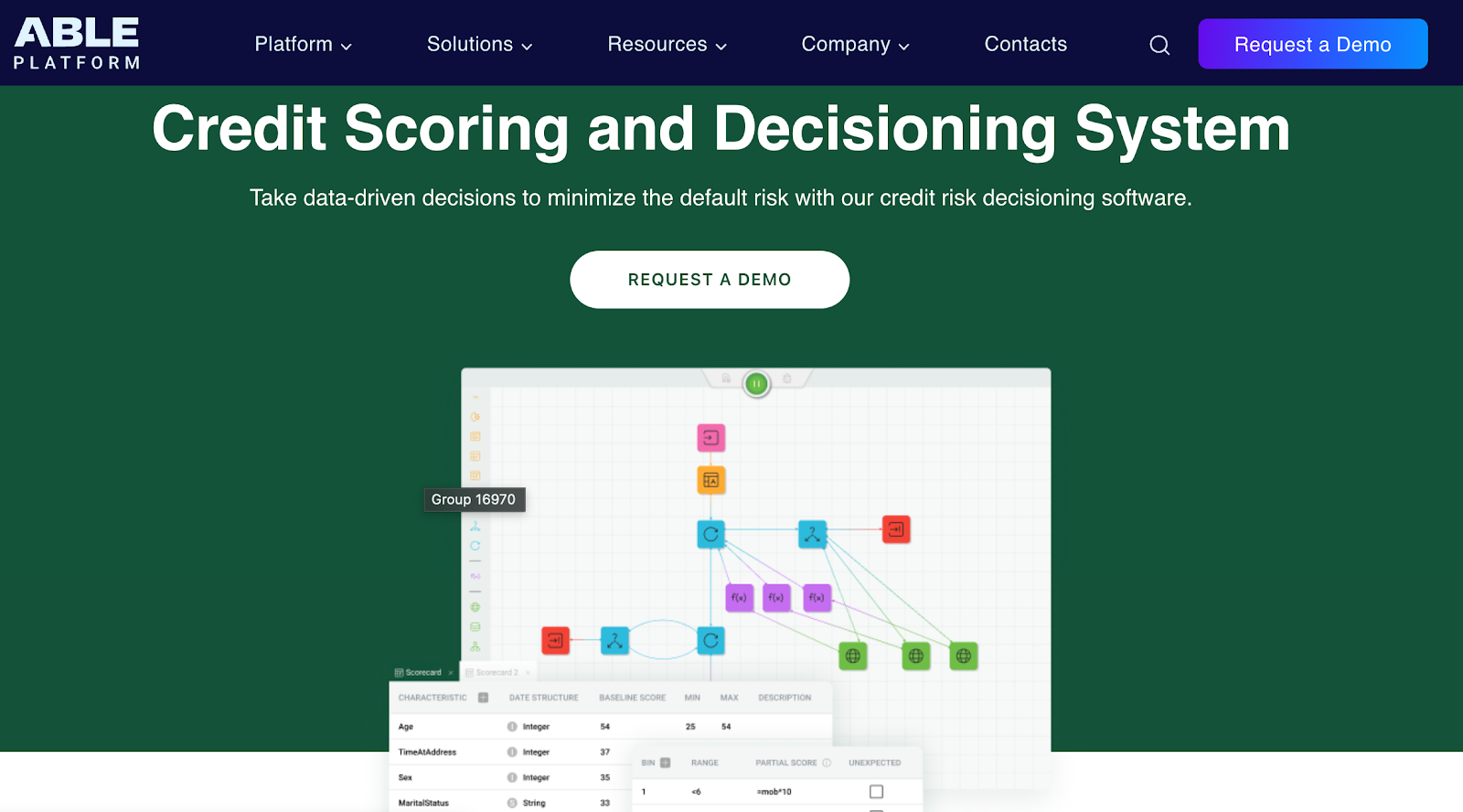
Able Platform is a credit decisioning and scoring system that helps lending teams review applications and build scoring models without deep technical work.
The system uses a visual setup that lets business and risk teams shape rules, add data sources, and adjust decision steps as credit needs change.
Users can connect internal and external data, run scoring models, and set approval paths from one place. The platform supports credit reviews for many types of business finance programs and can be used to check default risk, test new rules, and update models over time.
Key Features
- Low-code rule builder - Teams can create and adjust credit rules and approval paths through a visual editor
- Data source integration - Connects to internal systems, credit bureaus, and fraud tools so teams can use real-time data
- Model deployment - Supports scoring models built in Python, Java, R, or SAS and runs them inside the decision flow
- Scenario testing - Allows teams to test scoring changes and compare model versions before going live
- Customer view - Brings customer and application data into one screen to support fast review during decision steps
8. Finanta for Portfolio Management
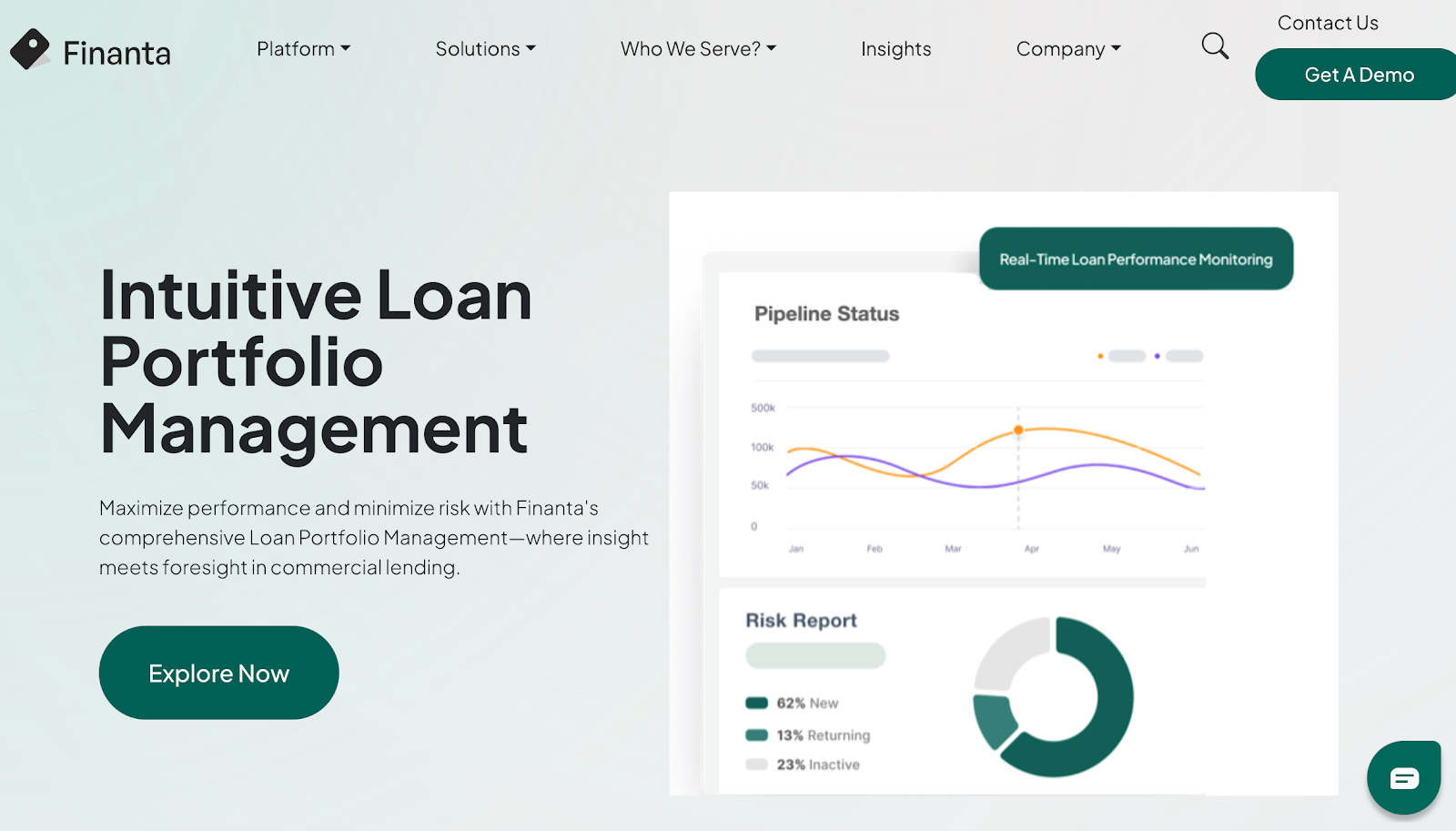
Finanta is a commercial lending tool that brings loan data, borrower insight, and portfolio activity into one view. It helps lending teams review performance, spot early risk signals, and understand how each part of the portfolio is moving over time.
The system also gives teams access to borrower details, financial history, and account behavior so they can make steady decisions across business finance programs.
The platform supports portfolio review, risk checks, trend tracking, and operational oversight. Users can monitor loan activity, view aging details, study concentration levels, and review pipeline movement from application to funding.
Key Features
- Borrower insight view - Shows borrower history, financial data, and relationship details in one screen
- Risk analytics - Tracks delinquency patterns, charge-off activity, and concentration data across loan groups
- Pipeline tracking - Helps teams follow application cycles, conversion levels, and timing across lending stages
- Portfolio composition review - Displays trends in balances, utilization, and product mix across segments and regions
- Loan performance monitoring - Gives teams live activity data to support a clear review of each account in the portfolio
Benefits of Lending Software for Financial Institutions
Adding new software to your process can feel like a big change. Your underwriting team may worry about learning something new or breaking old habits. It is normal to feel that way, but the shift often pays off fast.
When you use the right tools, your lending business becomes easier to manage and far more organized. Here are the key benefits that can help you and your team stay ahead as your client base grows.
Faster And Clearer Decisions
Speed is important when you work in commercial lending. Many clients look for quick answers because delays can slow their plans. A digital system reviews data as soon as an application comes in.
Some automation tools can parse bank statements, read credit information, and apply your pre-set rules without waiting for manual review. This lets you approve or decline files faster.
If a business sends updated financials, the system can read the numbers right away, so your team does not lose time.
Better Efficiency
Manual work slows down your day. A digital setup takes over repetitive tasks like collecting documents, checking forms, and updating records. This improves operational efficiency because you free your team from basic data entry.
It also lowers the chance of small mistakes that can delay approvals. With more time and cleaner files, your team can focus on reviewing deals, helping clients, and keeping your loan portfolios healthy.
Stronger Risk Control
Risk can be harder to manage when data is scattered across many tools. Lending software places everything in one place and reviews it through clear steps. It can highlight income issues, missing details, or early signs of repayment concerns.
This gives you a stronger view of your commercial lending activity. You can act sooner, guide clients when needed, and protect your books with more confidence.
Better Borrower Experience
After approval, accounts need steady attention. Strong software helps you update balances, track activity, and manage payment schedules with less effort.
When clients pay, the information is recorded right away. When accounts need changes, your team can update them without digging through old files.
The software also helps clients stay on track with clear reminders and simple account access, which supports smoother lending services for your team.
Easier Compliance
Compliance work often feels slow because it involves many checks, forms, and record reviews. Good lending software reduces this pressure by keeping key details in order and running many steps in the background.
One of the biggest time savers is faster KYB verification. Instead of waiting on manual reviews or digging through multiple sources, the system pulls data from verified channels and checks business information in seconds.
This shortens your early review steps and helps your team spot issues before they delay a file.
Make Your Lending Workflow Faster With Heron
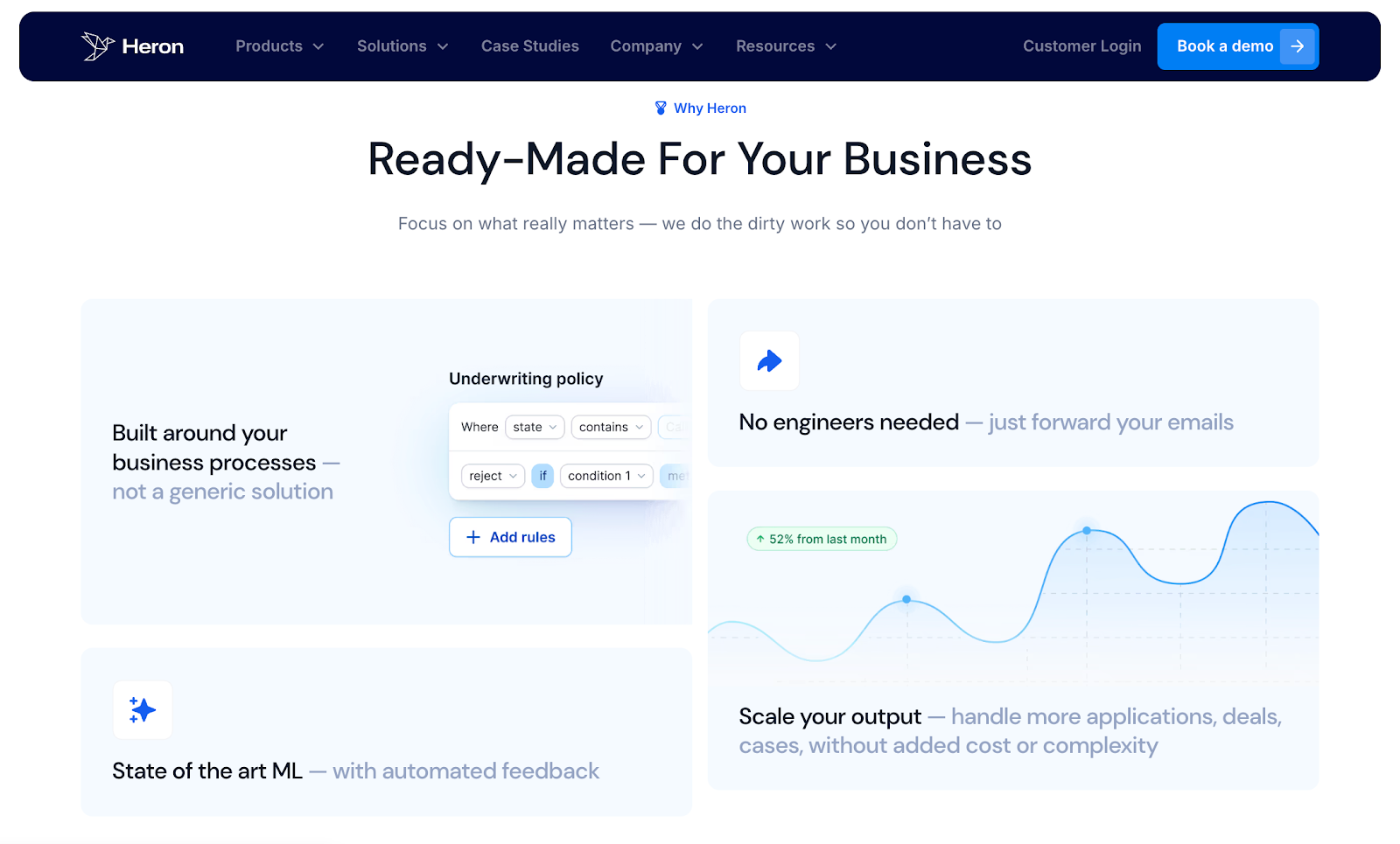
Heron gives you a faster and cleaner way to handle the loan process on a single platform. You no longer need to dig through inboxes or switch between tools.
The system turns messy files into decision-ready data in minutes. It also helps your underwriting team cut its turnaround time because documents are parsed, checked, and synced without extra steps.
Many funders use Heron to increase efficiency and reduce costs because it removes hours of manual work. Your underwriting team can save more than 10,000 hours each week once you shift data entry, document intake, and bank statement review into Heron.
That saved time goes straight back into closing deals, supporting partners, and growing your business rather than getting buried in paperwork.
If you want a simple way to speed up reviews, keep your data clean, and support your underwriting team, Heron makes that possible.
FAQs About Lending Software
What is the best loan management software?
The best loan management software depends on what you need, since every funder works in a different way. Many teams pick well-known tools like LoanPro and TurnKey Lender because they help with account tracking, payment handling, and clear reports.
What is lending software?
Lending software is a tool that helps funders review loan requests, track payment activity, and keep all account details in one place. It makes the whole process easier to manage from the first check to the final payment.
Which software is mostly used in finance?
Finance teams often use tools for accounting, risk checks, and data management because these help them stay organized and make clear decisions. These systems handle daily tasks and keep important numbers easy to access.
What are the 4 C's of lending?
The four C’s of lending are character, capacity, capital, and collateral. Funders use these points to see if a borrower can repay, how stable their financial situation is, and what support is in place if something goes wrong.