
Do you ever open your inbox and feel like every file needs something different?
Some applications look fine. Others raise quick questions that slow your team down. When you’re trying to move deals forward, that back-and-forth can take up more time than the deal itself.
A Know Your Business (KYB) checklist gives your team a steady base to work from. It keeps the early steps simple and helps you catch the details that slip through on busy days.
Many MCA funders, brokers, and small-business lending teams use KYB solutions to stay organized and keep the review process steady.
The right KYB steps help you avoid surprises, reduce mistakes, and push clean files straight to underwriting.
Let’s walk through the KYB checklist your team can use to stay organized and keep deals moving.
What Is a KYB Checklist?
A KYB checklist is a simple guide your team can use to confirm the basic details of business entities before you move a file deeper into review.
It walks you through the first steps of verifying customer information like business name, address, owners, and registration details.
MCA funders, brokers, and insurance teams use it to keep every file steady and avoid spending time on applications that don’t meet the mark when reviewing corporate clients.
The checklist keeps your early review clean. You check company information, confirm ownership, look at public records, and make sure the business is real and active.
It also helps you spot anything that needs a closer look, which makes KYB verification important for teams handling daily volume.
A clear checklist removes guesswork. It helps your team reduce risks like identity fraud and prevent financial crime before they slow the deal down.
It supports ongoing monitoring later in the lifecycle and makes the onboarding process smoother when you bring new customers into your flow.
When Do You Need a KYB Checklist in Your Workflow?
You deal with many different files every day. Some look clean, some raise small questions the moment they land in your inbox. A KYB checklist helps you sort these situations fast, without slowing down your team.
You need a checklist when:
- New business customers apply for funding - Fresh files often arrive with gaps. A checklist keeps your early review steady and makes sure you confirm the basics before moving forward.
- You see higher-risk industries or unusual submissions - A simple checklist helps you spot higher-risk customers and flag anything that needs a second look before it reaches underwriting.
- Repeat customers make changes - New ownership, a new address, or updated banking details all need another pass. A checklist keeps the details straight and protects the rest of your workflow.
Your team moves faster when the early steps stay simple and follow regulatory requirements.
The Complete KYB Checklist
Now that you know where KYB fits in your workflow, here’s the checklist your team can follow. It keeps the early review simple and helps your team stay clear on what to do next.
1. Business Identity Basics
Before you move a file forward, your team needs the basic details. This step also helps your team stay aligned with regulatory obligations while keeping business relationships steady.
Start with the legal business name, registered address, EIN, and ownership structures that show who controls the business.
Make sure the business information matches what you see in the application and supporting documents to keep the verification process clean.
This early pass gives you a clean start and prevents confusion later. It also supports your business verification services if your team handles high daily volume.
When the basics stay tight, the rest of the review moves faster and avoids back-and-forth with the ISO or applicant.
2. Business Status & Registration Checks
Once you confirm the basic details, take a quick look at the business status. This step helps your team avoid spending time on files that aren’t active or ready for funding.
Check the active status, formation date, and good standing. These small checks keep your workflow clean.
Heron’s Secretary of State (SOS) verification pulls this information instantly, helping your team apply a risk-based approach without slowing down.
This step also supports your KYB compliance work under national and international regulations and stabilizes your business relationships with ISOs and merchants.
When you know the business is real, active, and up to date, your team can focus on real deals instead of chasing dead files.
3. Operational & Web Presence Review
This step helps you understand how the business shows up online. It doesn’t need to be complicated. You just want a quick, steady pass that supports your early review.
Check the website, the contact details, and any signs of activity. Look at social pages if the business has them. These small pieces help you confirm that both the business and its operations look consistent with what’s on the application.
Heron’s web presence analysis does this work for you and surfaces anything that looks off.
It also helps you spot potential risks early through simple screening steps like adverse media screening, so you know when a file needs a closer look before moving into underwriting.
4. Financial Health Signals
This part tells you how the business handles money day to day. It gives your team a quick picture before you dig deeper into the deal.
Review bank statements, deposits, NSFs, cash-flow patterns, and anything that stands out. A simple bank statement pass helps you see if the business is steady or struggling.
Heron’s bank statement scrubbing handles this step for you and keeps everything clear inside your CRM.
When the file calls for it, you can also use automated tools to help with early checks. The goal here stays simple: give your team a quick read on stability before they commit more time to the deal.
5. Court, Compliance & Risk Flags
A quick check for legal or compliance issues helps you avoid surprises later and maintain trust with your business partners.
Look for active cases, past filings, or UCC records tied to the business. This step helps you see small details that sometimes get overlooked in a busy day. Heron’s instant court research makes this easy and gives your team cleaner files to work with.
If it fits naturally, you can also check for ultimate beneficial owners or politically exposed persons when something in the file feels unclear.
These quick checks help you spot risk factors early for better risk management and prevent avoidable delays later in the workflow.
6. Document Validation Steps
Now, you make sure everything in the file lines up. This step protects your team and keeps the rest of the work steady.
Check for matching details across documents. Look at IDs, bank statements, and forms to make sure the information matches what you see in the application. If something feels off, take a second look before moving the file forward.
Tools that support document fraud detection help you validate data and catch altered PDFs, mismatched details, or files that need a closer review.
Heron flags these issues right away, giving your team the confidence to move forward without stress.
How a KYB Checklist Helps Your Team Work Faster
A KYB checklist keeps the early steps steady and helps in initial risk assessment, especially when you’re sorting through files that all look a little different.
When every file goes through the same steps, you catch problems sooner, spot missing details earlier, and keep deals moving without unnecessary delays.
A good KYB checklist helps your team:
- Move through files faster - You always know the next step, which keeps the workflow smooth even on busy days.
- Catch issues early - Wrong addresses, mismatched details, or odd activity get spotted before they turn into bigger headaches.
- Cut back on rework - Clean steps mean fewer surprises when a file reaches underwriting.
- Stay organized with any volume - Whether you’re handling 20 files or 200, the same simple outline keeps the work steady.
- Lower the chance of stalled deals - When the basics are correct up front, you avoid delays later in the process.
It’s a simple tool, but it makes a big difference across the entire process. A clear KYB checklist gives your team structure, saves time, and clarifies what the process involves, which improves customer satisfaction.
Why KYB Matters for Financial Institutions and Commercial Clients
For MCA funders, brokers, and insurance teams, KYB isn’t just another step.
It’s how you protect your book, keep deals moving, and stay aligned with what financial institutions expect from a clean and simple review process.
Strong KYB also supports your commercial and corporate customers because it helps you avoid delays, keep files accurate, and improve overall customer experience.
A good KYB flow gives you clearer insight into a business and its entity's risk profile. You catch gaps early during initial verification, spot unusual activity through continuous monitoring, and use simple KYB verification methods to confirm business details before moving deeper into underwriting.
These checks also help your team prevent money laundering, reduce exposure to terrorist financing, screen for issues through adverse media checks, and follow anti-money-laundering expectations set by groups like the Financial Action Task Force.
When your steps stay clean, you support KYC compliance, meet KYB requirements, and give your compliance teams fewer surprises later in the file.
A clear KYB flow strengthens your decision-making process, reduces common KYB challenges, and helps you ensure compliance without slowing down deals.
How Heron Supports KYB Checks for Funders and Brokers
MCAs deal with nonstop files, each one needing identity checks, status checks, court searches, online reviews, and document validation. The work is necessary, but it’s slow when done by hand.
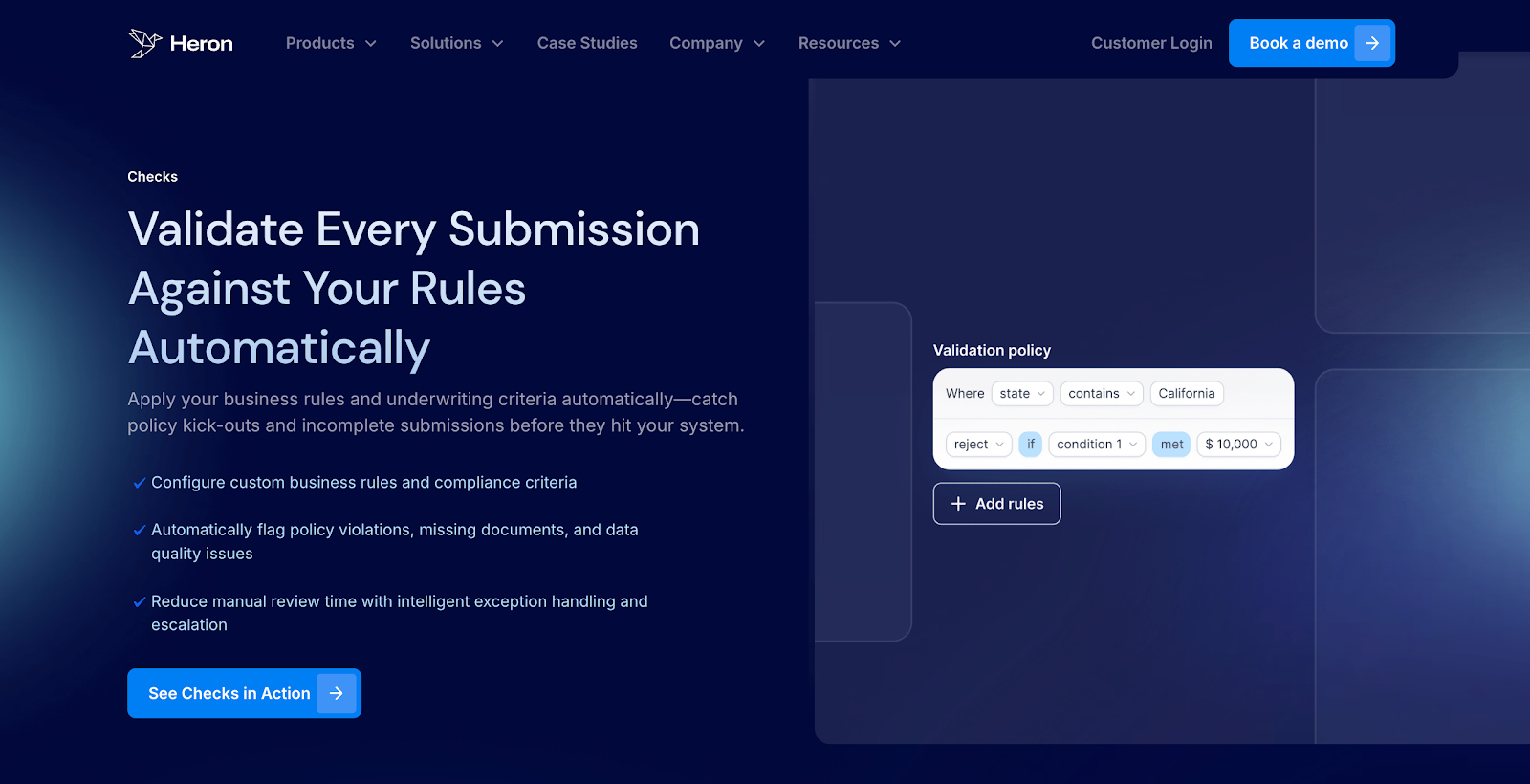
Heron handles those reviews for you. It pulls the data, scrubs it, and gives your team a clear picture fast, which keeps your business process steady without adding more work to your day.
You keep the KYB process, only with far less manual work and a smoother path from intake to decision.
Secretary of State Verification
The first steps in KYB, such as confirming the business name, registration, and standing, usually take the most time. Heron brings this information from multiple data sources across all 50 states and D.C. into one clean result.
It matches name variations, highlights status changes, and adds timestamped screenshots for record-keeping and a clear audit trail. No more switching between state sites or waiting for incomplete records.
Court Records Search
Court checks can be easy to overlook when the day gets busy. Heron checks federal and state court databases in seconds, surfaces lawsuits, judgments, and filings tied to the business or its owners, and gives your team fewer false positives to sort through.
You spot issues early and avoid pushing risky files further than they should go, which strengthens your regulatory compliance posture.
Web Presence Verification
Part of KYB is confirming that the business looks active and real outside of the documents they provided.
Heron scans websites, reviews, social pages, and directory listings. It flags thin or inconsistent online activity and gives you a fuller view of how the company operates.
Financial Signals and History
Bank statements, deposits, NSFs, and cash-flow patterns show how the business handles money day to day within the financial system. Heron scrubs these statements for you and presents the data clearly.
Bureau information can be added when needed, helping your team understand stability before diving deeper into a deal.
Address and Document Checks
Small errors in addresses or forms can slow everything down. Heron verifies the address, corrects mistakes, and confirms the location is real.
It also flags mismatched statements, altered PDFs, and other document issues so your team works with data they can trust.
FAQs About KYB Checklist
What is the role of KYB in anti-money laundering?
KYB plays a key role in anti-money laundering because it confirms that a business is real, active, and operating as stated. It helps teams detect unusual activity, prevent financial crime, and stay aligned with AML expectations by reviewing ownership, registrations, online presence, and financial behavior before a deal moves forward.
How often should businesses run KYB checks on customers?
Teams usually run KYB checks at onboarding and during any major changes like ownership updates, new bank information, or signs of unusual activity. Higher-risk customers may require more frequent monitoring.
What happens if a business fails a KYB check?
If a business fails a KYB check, the file usually moves into a manual review. Teams look closer at mismatched information, unusual financial activity, or missing documents before deciding whether to continue, request more details, or decline the application.