Many teams hear “Know Your Business (KYB)" more often now, especially as more companies start relying on KYB solutions to keep their workflows safe and clean.
Still, it often feels like one more thing to figure out.
In reality, KYB sits at the center of keeping your business safe. You deal with new partners, new accounts, and new activity every day. You want to trust the information you see, avoid messy surprises, and stay clear of risky situations.
KYB verification helps you do that. It gives you a clear view of who you work with and what stands behind their company. It cuts guesswork and helps your team move with confidence.
Let’s walk through what KYB means, what it checks, and why it matters for any team that wants to stay safe and move fast.
What Is KYB Verification?
KYB verification is the process that gives you a clear view of the companies you deal with. It helps you confirm that a business is real, registered, and safe to work with.
You look at basic business information, the people who hold significant control, and the financial activities tied to the company.
KYB checks three simple things.
- It checks a company’s identity and business registration status.
- Then, it looks at the corporate structure, including directors and ultimate beneficial owners (UBOs).
- Finally, it reviews activity around the business, such as adverse media, past issues, or signals that help you spot potential risks early.
Teams use KYB to stay ahead of regulatory requirements, support fraud prevention, and stop those who try to use legitimate businesses to hide terrorist financing or other financial crimes.
KYB vs. KYC: Key Differences
KYB and KYC (Know Your Customer) go hand in hand, but they focus on different sides of risk. Both help protect businesses, support regulatory compliance, and keep your onboarding process clean.
The difference comes down to who you check and what you look for.
KYC
KYC checks people.
You look at someone’s identity, documents, and past activity. You confirm that the person behind the account is real and safe to work with. KYC also covers customer due diligence, review of financial accounts, and screening for politically exposed persons.
These checks help regulated entities prevent fraud and support AML compliance as part of broader anti-money laundering rules.
KYC helps you spot early risk factors, especially when someone handles sensitive financial transactions or connects to high-risk entities.
KYB
KYB checks businesses.
Instead of reviewing a single person, you look at the company itself, its beneficial ownership structure, its business licenses, and the people who have real control.
You confirm that the company is legitimate, matches official government registries, and fits a clean risk profile before moving forward.
KYB also pulls in deeper signals like global sanctions lists, past issues, or document verification results. These steps help teams perform KYB checks, manage compliance and risk management, and follow KYB regulations designed to prevent money laundering and other financial abuse.
Many teams now use automated KYB solutions or KYB software to move faster and reduce mistakes.
KYB Compliance and Key Regulations
KYB sits inside the wider AML and compliance framework. It helps you confirm that a business is real, active, and safe before you approve funding or move forward with a partnership.
Different rules guide KYB, but the goal stays the same: keep your business protected and aligned with KYB requirements.
Here are the main regulations teams pay attention to:
- Bank Secrecy Act (BSA) – sets expectations around reporting, screening, and due diligence.
- Financial Action Task Force (FATF) – global standards for AML practices and risk controls.
- AML regulations – require teams to verify businesses, check owners, and avoid ties to illegal activity.
- CDD and Beneficial Ownership rules – require a clear view of who owns or controls the business.
KYB compliance helps your team avoid bad actors, catch red flags early, and apply enhanced due diligence while staying aligned with business regulations as they evolve.
It also supports cleaner decisions during onboarding, especially when many accounts move through the pipeline each week.
Why Does KYB Verification Matter?
KYB matters because it gives you clarity before moving money, approving a deal, or onboarding a new business.
When you bring in new partners or sellers, you want a clear sense of who they are, how they operate, and whether they fit the risk level your team can manage.
Strong KYB procedures help you spot issues before money moves, accounts get opened, or sensitive activity begins.
These checks protect you from bad actors who try to hide behind a company name, especially when you deal with financial transactions or higher-volume activity tied to financial entities and asset managers.
KYB also helps you stay aligned with the main AML rules that oversee business verification. Meeting KYB compliance requirements keeps your team aligned with business regulations and reduces surprises during audits or reviews.
Many teams now rely on automated KYB processes to speed up onboarding business customers, build a clearer risk profile, and review customer risk with a simple, risk-based approach.
These steps protect your operations and help you keep your growth safe.
Key KYB Procedures and Checks
A solid KYB process helps teams stay confident before approving a deal or bringing a new business into the pipeline. These steps reduce surprises and keep your workflow clean.
Company Checks
Start by confirming that the business exists, is registered, and is allowed to operate. This includes checking the legal name, address, and business registration status in state or government records.
These basics protect your team from onboarding a company that looks active on paper but isn’t operating in the real world.
Ownership Checks
Next, look at who runs the business and who holds real control. This covers directors, shareholders, and UBOs.
Clear ownership details help prevent hidden actors, mismatches, or structures that raise questions during underwriting.
Screening Checks
At this stage, teams compare the business and its key individuals against sanctions lists, watchlists, and known fraud indicators.
These checks bring risk signals to the surface early, before time is wasted moving a deal forward.
Ongoing Checks
Businesses change, so their risk picture changes too. Re-check details when ownership shifts, addresses update, filings change, or new activity appears. This helps teams stay current and respond quickly when risk levels move.
Who Needs KYB Checks?
KYB matters for any team that works with new businesses, reviews financial documents, or approves funding.
If you work with business owners who apply for loans or advances, KYB gives you a clear picture of who you’re dealing with before money goes out the door.
MCA brokers, funders, and underwriters rely on KYB every day. Banks, fintech lenders, payment providers, and other financial institutions use KYB to confirm that each business is real, active, and safe to fund.
These teams see high volumes of applications, so they need solid checks in place before deciding on a deal.
Platforms also depend on KYB. Marketplaces, gaming platforms, and crypto platforms use these checks to make sure each business entering their system is legitimate and not tied to risky activity.
Many other B2B teams use KYB for practical protection. They want fewer disputes, fewer chargebacks, and partners they can trust. KYB helps them move with confidence and cut down on disputes and surprises down the line.
Interested in cleaner KYB data that fits your underwriting flow? Schedule a Heron demo now.
Manual KYB vs. Automated KYB
Manual KYB takes time. Brokers and funders often switch between PDFs, state sites, emails, and internal tools just to confirm basic details about a business.
When you’re reviewing multiple deals a day, this back-and-forth slows everything down and makes it easy to miss updates, mismatched information, or small red flags buried in the paperwork.
Manual checks also stack up fast. You’re looking at business filings, ownership lists, old documents, sanctions results, and anything tied to the company’s history. When every step is done by hand, even a simple file can turn into a long review cycle.
Automated KYB changes that. Instead of digging through different sources, teams see clean business information in one place. Registration data, ownership details, sanctions checks, and updates pull in automatically, so you don’t waste time chasing small pieces of data.
Automation keeps your workflow consistent and helps you stay ahead of risk as volume grows. Many MCA teams pair automated KYB with their underwriting tools so they can scrub files faster, cut manual work, and approve deals with more confidence.
The Smarter Way to Handle KYB Verification
Heron gives funders a faster, cleaner way to verify businesses before money goes out the door.
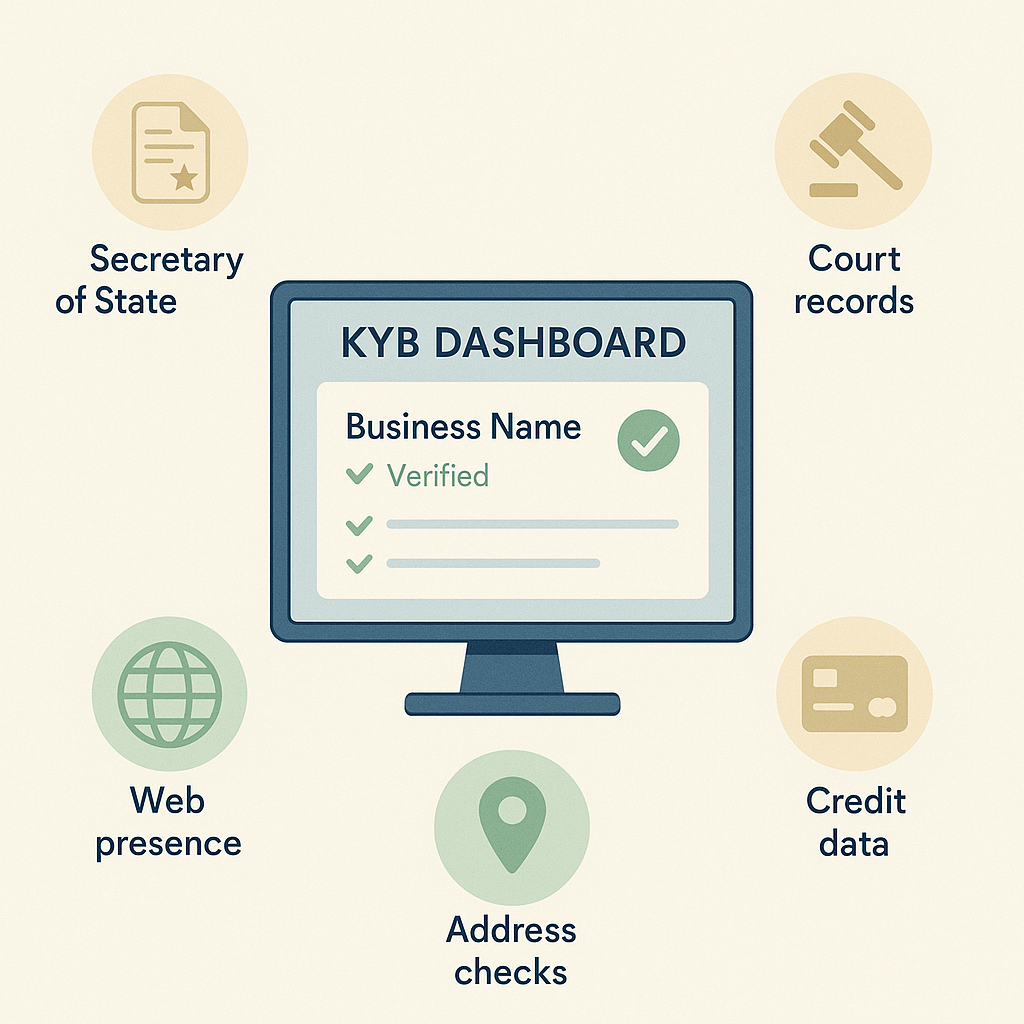
Instead of switching between state sites, court portals, search engines, and credit tools, your team sees verified KYB data in one place. This keeps reviews tight, protects your book, and removes hours of manual scrubbing from every deal.
Below is a closer look at the KYB tools that help MCA funders and brokers stay safe at scale.
Secretary of State Verification
SOS checks usually take several minutes per file and often require searching multiple name variations. Heron pulls real-time registration data from all 50 states and D.C. in seconds, matching business names with 98% accuracy.
You see the company’s status, filings, and timestamped screenshots immediately, making it easier to confirm the business exists, is active, and meets KYB requirements before you move the deal forward.
Court Records Search
Missed lawsuits lead to bad approvals. Heron connects directly to federal and state court databases and checks both the business and its owners in five seconds.
You see judgments, liens, and open cases right away, removing the risk of funding a business with hidden legal trouble that didn’t surface during manual reviews.
Web Presence Analysis
A real business leaves a footprint, which is why strong KYB now includes web presence analysis to validate activity beyond paperwork. Heron checks websites, social profiles, reviews, and public listings in under 10 seconds to confirm the company and its owners are active and legitimate.
It flags missing online activity, sudden rating drops, or negative trends that bank statements don’t show. This helps funders catch authenticity issues early, especially for files that look good on paper but fail basic legitimacy checks.
Credit Bureau Data
Heron pulls credit bureau details within seconds, giving you a clear view of payment behavior, financial patterns, and signs of stress.
These signals support KYB by showing whether a business handles obligations cleanly or shows risky trends that need closer review. Irregular activity is flagged immediately, so your team doesn’t miss early warning signs.
NAICS Database
Industry matters — some sectors are restricted or higher risk. Heron’s NAICS classifier identifies the correct industry with over 97% accuracy, helping you flag sectors your team won’t fund.
This keeps your KYB checks aligned with internal policies and helps you avoid businesses that fall outside your risk appetite.
Address Validation
Heron verifies every business address against postal and mapping databases. It fixes typos, confirms the location exists, and identifies high-risk areas or mismatches between stated operations and real presence.
This protects you from files with inaccurate or misleading information and helps your team maintain stronger underwriting efficiency.
DataMerch History
Some businesses have repayment issues you won’t see in a credit report. Heron taps directly into DataMerch, giving funders access to over 100,000 merchant records.
You can see past defaults, slow-pay patterns, and warning flags from other funders, which is a critical context for finalizing your KYB risk profile.
FAQs About What Is KYB
What is the KYB verification process?
The KYB verification process confirms that business entities are real, active, and safe to work with. This includes checking registration records, ownership, sanctions results, and risk alerts. Funders and platforms use KYB to complete a simple risk assessment before moving a deal forward.
Why do businesses need KYB checks?
Businesses need KYB checks to protect themselves from fraud, fake companies, and risky business relationships. These checks help teams confirm who they’re dealing with, verify ownership, and spot early signs of illegal activity so they can remain compliant with regulatory expectations.
How does KYB reduce risk during onboarding?
KYB reduces risk by giving teams a clear view of a company’s structure, activity, and ownership before money moves. It brings all the key details together so teams can complete a fast, accurate risk assessment and steer clear of unstable or high-risk businesses before money leaves your account.